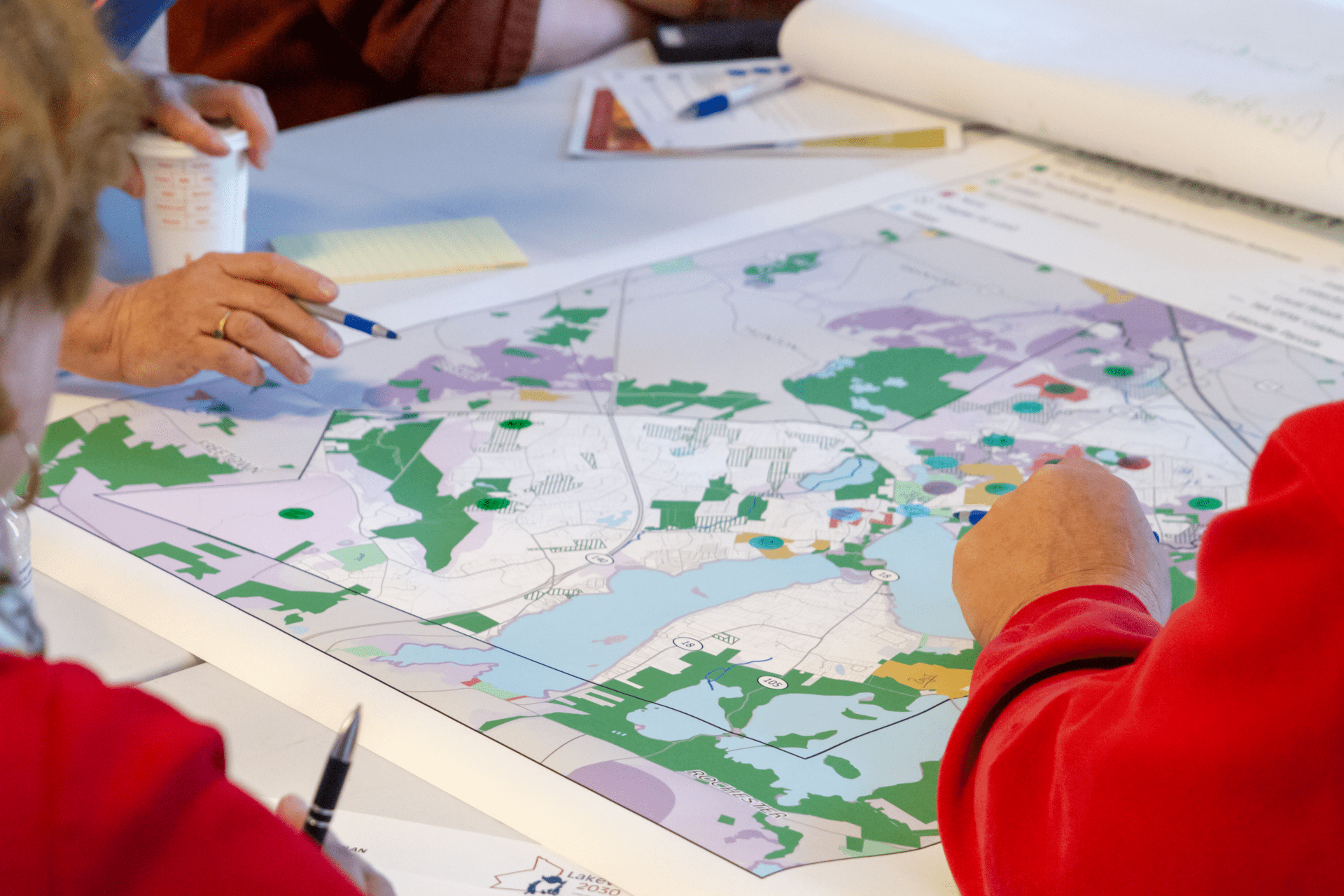
Over half of SRPEDD's 27 communities have chosen to work with SRPEDD on their own vitally important long-range Master Plans. Through these partnerships, SRPEDD has used tradition planning best practices, significant public input, and innovative online and in-person techniques to move the projects forward in meaningful, exciting, and transparent ways.
Why so much enthusiasm and interest in master planning? Communities clearly recognize the value of a unifying, long-range plan. And, well, matching grant funds from DLTA, the Community Compact Cabinet, and the Community One Stop for Growth certainly don't hurt the projects. But more than all that, we think that SRPEDD's community-based, collaborative, and deferential approach is also a key ingredient to the successful Master Plan formula.
Communities can think of SRPEDD staff as members of their own customized master planning team, each experienced and committed to making the entire process as easy and effective as possible. To this end, we gather and analyze information presented at a series of initial public workshops with local residents, business owners, and officials. It’s at this point that the effort really takes off. Sure, the data is informative and presentations from SRPEDD staff can help set the table discussion. But it’s the participants from each community that are the true experts. In other words, we attend these events to learn from you - not vice versa. Your ideas, hopes, and aims for the future are what ultimately shape the Master Plan and its "Vision."
When Master Planning goes public, local champions emerge. Similarly, we ensure that we meet communities "where they're at" - at community events, online through social media and surveys, and at specialized workshops to generate meaningful, substantive content for the plan.
After consensus on a Master Plan's Vision, SRPEDD ensures that the document will be user-friendly, beautifully designed, and ready to implement by the community. For example, most of our recent Master Plans, such as the Swansea Master Plan, include a handy "Implementation Guide" that almost reads like a recipe. These Guides clearly outline every strategy needed to put the plan into action. They list responsible parties, necessary steps and resources, performance measures, and model success stories. In a way, they are your Master Plan "cheat sheet."
As we look into the future, we hope to continue Master Planning with and learning from all 27 communities in the SRPEDD region.